Description
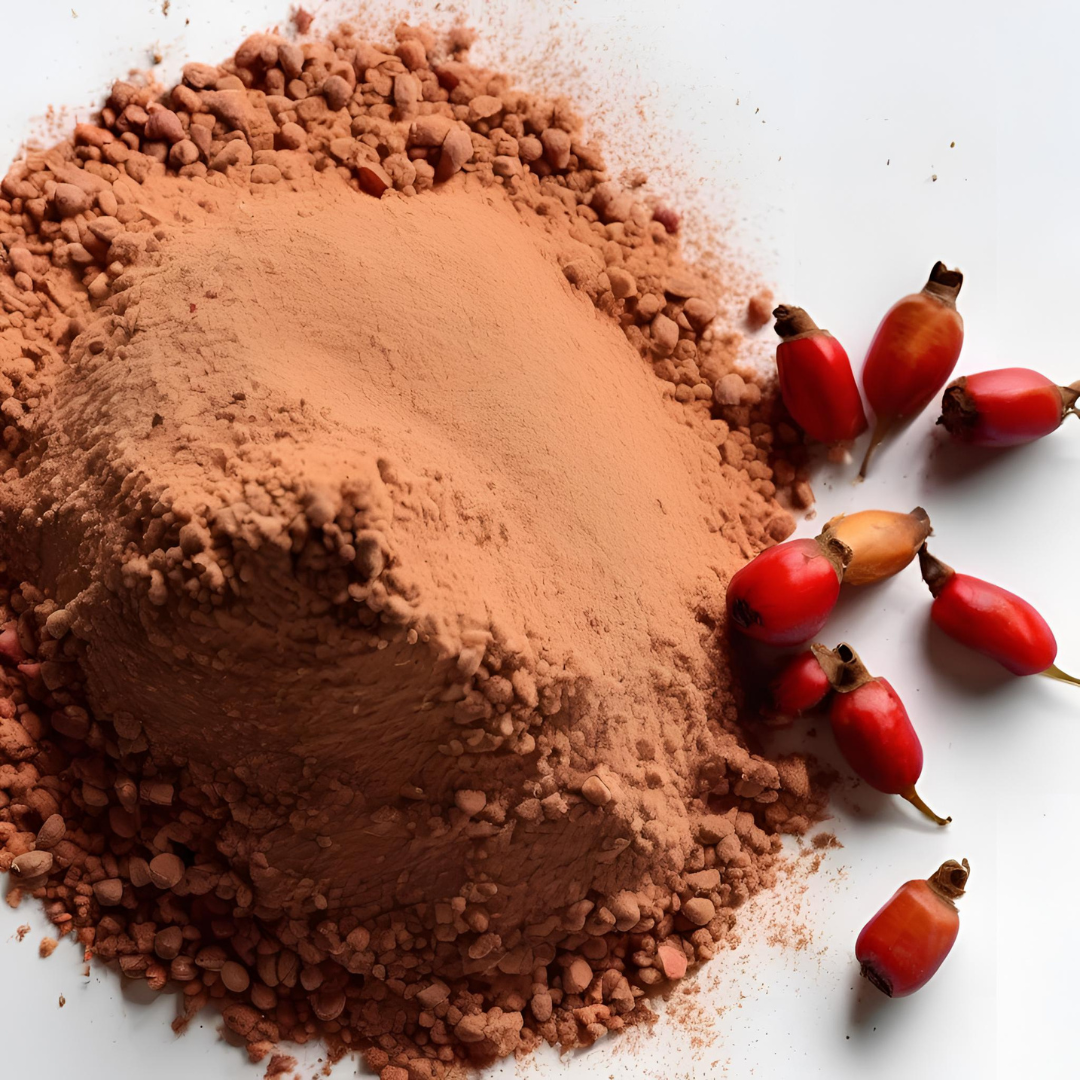
One ingredient. Ground rosehips. That’s it.
Rosehips (Rosa canina primarily) are the seed-bearing fruit of the rose — and they are one of the richest natural sources of Vitamin C on the planet, packing 5–20x the Vitamin C of an orange by weight. Beyond the bright Vitamin C profile, rosehips contain galactolipids (a class of compounds specifically researched for joint comfort), Vitamins A, E, and K, polyphenols, and bioflavonoids. Human-grade, organically sourced, ground to a fine powder, one pure ingredient.
What is rosehip powder used for in horses?
Rosehip powder is traditionally used to support joint comfort and mobility (the galactolipid research is particularly strong in this area), hoof growth and quality, immune function, tissue healing and recovery, and overall antioxidant support. It’s a staple in joint management programs and a favorite for senior horses and horses in heavy work.
Is rosehip powder safe for metabolic horses?
Yes. Single-ingredient rosehip powder contains no added sugar, no salt, no copper, and no electrolytes. While rosehips contain some naturally-occurring fruit sugars, the whole-food matrix and typical daily serving size keep the actual sugar contribution negligible for metabolic horses. Rosehip is safe for horses with insulin resistance (IR), Cushing’s disease (PPID), equine metabolic syndrome (EMS), and laminitis. Always introduce any new supplement gradually and consult your vet if your horse is on medication.
How much Vitamin C does rosehip actually contain?
This is one of those “did you know” facts the research keeps confirming: rosehips contain roughly 400–2,000mg of Vitamin C per 100g depending on variety and growing conditions, compared to an orange at about 53mg per 100g. BUT — here’s the important nuance: horses manufacture their own Vitamin C in their liver (unlike humans and dogs). So the Vitamin C story in horses is less about “correcting a deficiency” and more about supporting additional antioxidant capacity during periods of stress, illness, heavy work, or aging (when liver Vitamin C production can decline). That’s where rosehip’s value comes in for equine use.
How do I give rosehip powder to my horse?
Rosehip powder top-dresses easily on feed — a common starting dose for a 1,000 lb horse is 1–2 tablespoons daily, introduced gradually over 5–7 days. The slightly tart, fruity flavor is generally well-accepted. For joint support, effects are typically seen after 3–6 weeks of consistent daily use. Your vet or equine nutritionist can advise on specific daily dosages for your horse’s weight and condition.
What’s in it
- Ground rosehips (Rosa canina). That is the complete ingredient list.
- Human-grade. Organically sourced.
- Made in Land O’ Lakes, Florida.
What’s NOT in it
- No added sugar, salt, or electrolytes
- No copper, no fillers, no gums, no “natural flavors”
- No synthetic Vitamin C isolates (this is whole-food Vitamin C in its natural matrix)
- No glucosamine, MSM, or synthetic joint compounds — this is the botanical side of the joint conversation
Who it’s safe for
Horses in heavy work or performance training. Senior horses. Horses with joint comfort concerns. Horses recovering from illness or tissue trauma. Horses with insulin resistance (IR), Cushing’s disease (PPID), equine metabolic syndrome (EMS), and laminitis. Horses with poor hoof quality or slow hoof growth. Part of the Farmily — safe across species at appropriate doses.
Pairs well with
Rosehip powder is a primary pairing with Turmeric for joint support — the two are a classic herbal combination. It’s featured in the Joint & Circulation Pack, Immune Pack, Respiratory & Muscle Recovery Pack, Water Buffet Kit, and Sampler Mix.
Improve Equine is made in Land O’ Lakes, Florida. Rosehip is one of those herbs that quietly does more than anyone expects — which is probably why it’s been in herbal practice for centuries.
Important: This product is a health-supportive food-grade botanical. It is not a medicine, is not intended to diagnose, treat, cure, or prevent any disease, and is not a substitute for veterinary care. Always consult your veterinarian before starting any new supplement, especially for horses on medication or with diagnosed conditions.


Reviews
There are no reviews yet