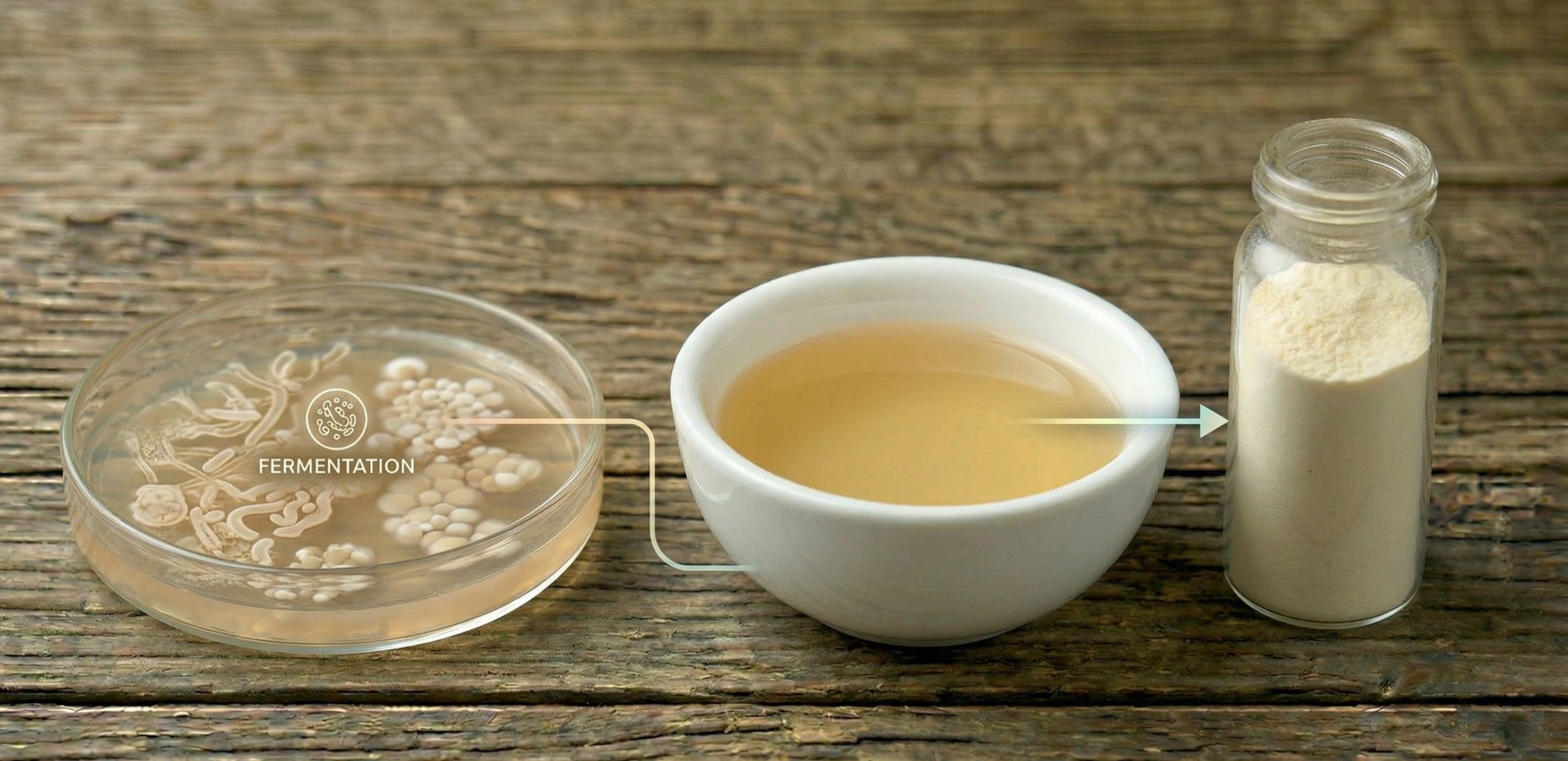
Ascorbyl palmitate is the fat-soluble (lipophilic) ester form of Vitamin C. Unlike standard ascorbic acid — which is water-soluble and clears from the body relatively quickly — ascorbyl palmitate integrates into lipid membranes and fatty tissues, providing extended antioxidant protection at the cellular level. This distinction matters for immune function, tissue defense, and the specific demands of an equine supplement designed to support allergy and inflammation pathways.
Key Research
Ascorbyl Palmitate Ameliorates Inflammatory Diseases by Inhibition of NLRP3 Inflammasome
Int Immunopharmacol. 2024 Apr 20:131:111915.
DOI: 10.1016/j.intimp.2024.111915 | PMID: 38522141
This research demonstrates that ascorbyl palmitate (AP), as a lipophilic derivative of ascorbic acid, is a potent inhibitor of the NLRP3 inflammasome — a key driver of inflammation in chronic immune-mediated conditions. Key findings:
- Compared to standard ascorbic acid, ascorbyl palmitate inhibited NLRP3 inflammasome activation with increased potency and specificity
- The mechanism involves direct scavenging of mitochondrial reactive oxygen species (mitoROS) — a lipid-membrane-accessible activity that water-soluble ascorbic acid cannot replicate
- Ascorbyl palmitate reduced downstream IL-1β release and inflammatory tissue damage in multiple in vivo inflammatory disease models
NLRP3 inflammasome activation is implicated in allergic airway disease, skin hypersensitivity, and joint inflammation — making this mechanism directly relevant to the conditions Benchmark is formulated to address.
Ascorbate 6-Palmitate Protects Cell Membranes from Oxidative Damage
Hwang J, Hodis HN, Sevanian A. Free Radic Biol Med. 1999 Jan;26(1-2):81–9.
DOI: 10.1016/s0891-5849(98)00198-1 | PMID: 9890643
This study investigated why the fat-soluble form of ascorbate behaves differently from water-soluble ascorbic acid. Key findings:
- Ascorbate 6-palmitate binds dose-dependently to cell membranes and is retained during membrane wash steps — confirming genuine membrane integration that water-soluble Vitamin C cannot achieve
- Cells treated with ascorbate 6-palmitate showed significantly greater protection against lipid peroxidation and oxidative membrane damage compared to controls
- The fat-soluble form provides antioxidant protection specifically at the lipid bilayer — the site of membrane phospholipid oxidation in inflammatory conditions
This is the physiological basis for why ascorbyl palmitate is a more appropriate form of Vitamin C for an equine supplement targeting skin, airway mucosa, and joint tissues — all of which are lipid-rich environments.
The Benchmark Formulation Rationale
Standard water-soluble Vitamin C is renally cleared rapidly. Ascorbyl palmitate stays in circulation longer because it integrates into lipid membranes. For a horse dealing with chronic allergy, airway inflammation, or dermal hypersensitivity, sustained antioxidant coverage — not a quick spike and rapid clearance — is the goal. The fat-soluble form delivers that.
Note: These studies support the rationale for choosing ascorbyl palmitate over standard ascorbic acid in a supplement designed for lipid-tissue antioxidant and anti-inflammatory support. Always consult a veterinarian regarding your horse’s specific health needs.
Frequently Asked Questions: Ascorbyl Palmitate for Horses
What is ascorbyl palmitate and why is it used in horse supplements?
Short answer: Ascorbyl palmitate is the fat-soluble form of Vitamin C — it integrates into cell membranes and provides sustained antioxidant protection in lipid-rich tissues like skin, airway mucosa, and joints, where standard water-soluble Vitamin C cannot reach effectively. Standard ascorbic acid dissolves in water and is rapidly cleared by the kidneys, providing only a brief antioxidant window. Ascorbyl palmitate binds to lipid bilayers and remains in tissues far longer, protecting cell membranes from the oxidative damage that drives chronic inflammation. For horses with ongoing inflammatory conditions, sustained cellular antioxidant coverage is the goal — not a rapid spike and clearance.
Does Vitamin C help horses with allergies or skin conditions?
Short answer: Yes — but the form matters. Ascorbyl palmitate specifically inhibits the NLRP3 inflammasome, a key driver of chronic inflammatory conditions including allergic airway disease, skin hypersensitivity, and joint inflammation, with greater potency than standard Vitamin C. The NLRP3 inflammasome is a cellular complex that triggers IL-1β release and amplifies inflammation in chronic immune-mediated conditions. Ascorbyl palmitate’s ability to access mitochondrial reactive oxygen species (mitoROS) at the lipid membrane level — a mechanism water-soluble ascorbic acid cannot replicate — makes it specifically effective at suppressing NLRP3-driven inflammation. For horses with sweet itch, heaves, or chronic skin conditions, this targeted mechanism is directly relevant.
Is ascorbyl palmitate better than regular Vitamin C for horses?
Short answer: For supporting skin, airway, and joint tissue specifically — yes. Ascorbyl palmitate reaches and stays in the lipid-rich tissues where most equine inflammatory conditions manifest, while standard ascorbic acid is rapidly excreted and never reaches those cellular compartments effectively. Horses can synthesize some Vitamin C endogenously, but horses under significant inflammatory or oxidative stress may benefit from supplemental lipid-tissue antioxidant support. The choice of form is the key variable: water-soluble ascorbic acid addresses water-phase oxidative stress, while ascorbyl palmitate addresses lipid-phase oxidative stress at the cell membrane — a different and complementary target.
How does ascorbyl palmitate work alongside DHA in horse inflammation support?
Short answer: Ascorbyl palmitate and DHA are both lipid-membrane-active compounds that protect and resolve inflammation at the cellular level — they work in complementary phases, with ascorbyl palmitate protecting membranes from oxidative damage and DHA actively resolving inflammatory signaling through specialized pro-resolving mediators. DHA from algae generates resolvins and protectins — compounds that actively switch off the inflammatory response and signal tissue repair. Ascorbyl palmitate protects the integrity of the cell membranes in which DHA is embedded. Together they address both prevention and resolution of lipid-membrane-based inflammation. See the DHA research article for details.
Is ascorbyl palmitate safe for horses with Cushing’s or insulin resistance?
Short answer: Yes — ascorbyl palmitate is not a sugar-containing compound and does not affect insulin or glucose metabolism, making it appropriate for metabolic horses who need anti-inflammatory support without metabolic risk. Horses with Cushing’s disease or insulin resistance often have elevated inflammatory markers and oxidative stress alongside their metabolic condition, making antioxidant support particularly relevant. Ascorbyl palmitate’s lipid-soluble form provides this support without any of the glycemic concerns associated with sugar-based supplements. As always, confirm with your veterinarian for horses under active medical management. For an overview of the full equine supplement philosophy, visit the Improve Equine Library and the Complete Guide to Horse Hydration.
Leave a Reply