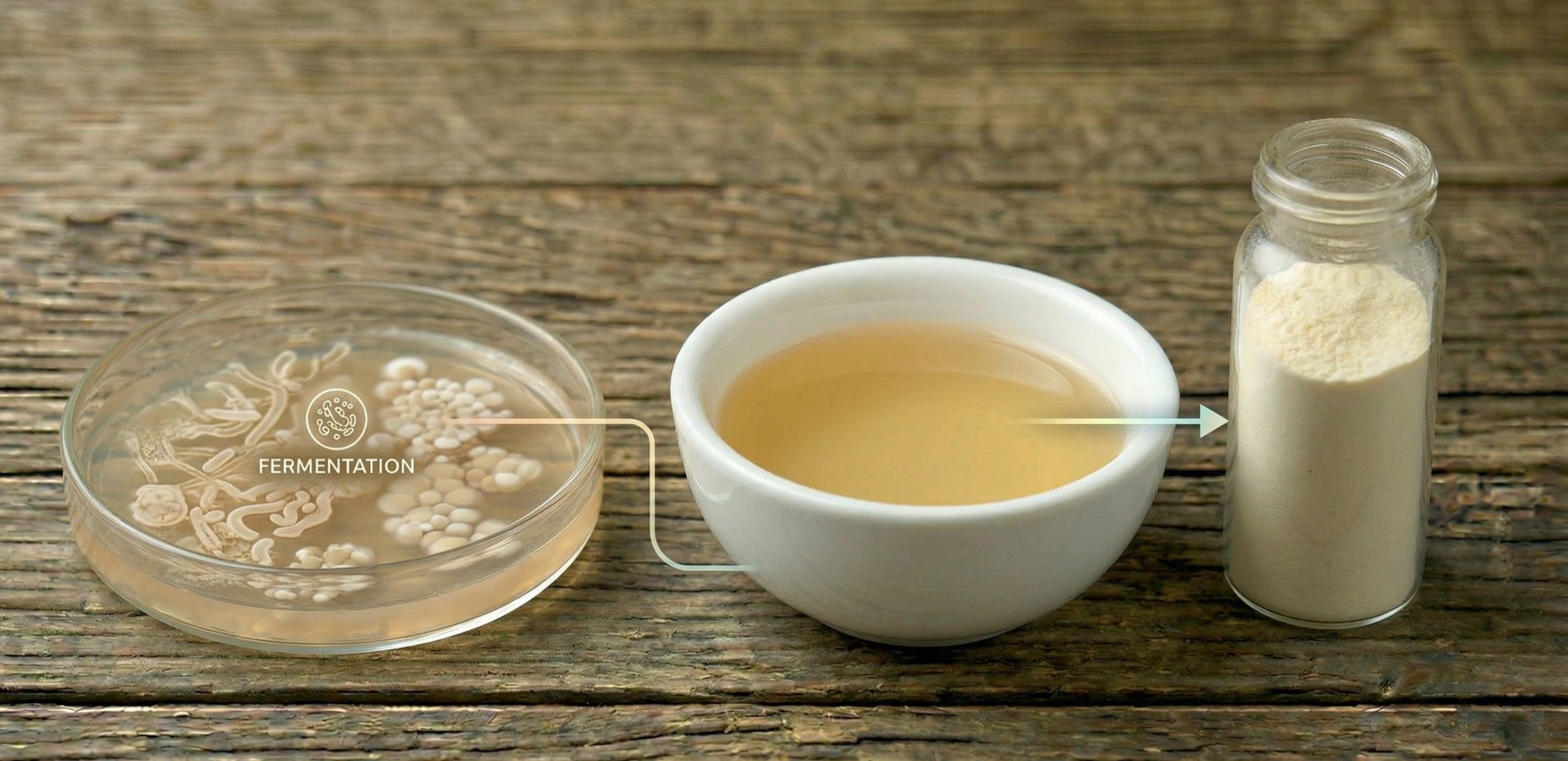
Docosahexaenoic acid (DHA) is a long-chain omega-3 polyunsaturated fatty acid found in highest concentrations in marine algae — the original biosynthetic source from which all dietary DHA ultimately derives. DHA and its downstream metabolites play a central role in resolving inflammation, modulating mast cell activity, and supporting immune regulation in both horses and other mammals. The choice to source DHA from algae rather than fish oil is a formulation decision grounded in stability, species-appropriateness, and supply chain control.
Key Research
Protectin D1, an Omega-3-Derived Lipid Mediator, Resolves Mast Cell-Driven Allergic Inflammation via FcεRI Signaling
Biomed Pharmacother. 2025 Jun:187:118060.
DOI: 10.1016/j.biopha.2025.118060 | PMID: 40253829
Protectin D1 (PD1) is a specialized pro-resolving mediator derived from DHA. This study demonstrates that PD1 directly counteracts mast cell-mediated allergic inflammation — the same pathway that Benchmark targets via quercetin and spirulina. Key findings:
- Oral PD1 markedly suppressed passive cutaneous anaphylaxis (PCA) reactions including ear swelling, plasma extravasation, and mast cell degranulation
- In active systemic anaphylaxis models, PD1 administration reduced IgE-mediated mast cell activation via the FcεRI signaling pathway — the primary trigger for histamine release in allergic responses
- This is direct mechanistic evidence linking DHA (as the precursor to Protectin D1) to resolution of the same mast cell degranulation and histamine pathways that drive equine allergic conditions
Omega-3 Fatty Acid Supplementation in Horses with Chronic Lower Airway Inflammatory Disease
Nogradi N, Couetil LL, Messick J, Stochelski MA, Burgess JR. J Vet Intern Med. 2015 Jan;29(1):299–306.
DOI: 10.1111/jvim.12488 | PMID: 25307169
This randomized, controlled clinical trial examined omega-3 PUFA supplementation in horses diagnosed with recurrent airway obstruction (RAO) and inflammatory airway disease (IAD) — the equine equivalents of heaves and chronic lower airway inflammation. Key findings:
- Omega-3 supplementation provided additional measurable benefit beyond a low-dust diet alone in managing clinical signs and airway inflammation
- Supplemented horses showed improvements in lung function and inflammatory markers in bronchoalveolar lavage fluid
- The study directly supports the use of omega-3 fatty acids as part of a multi-ingredient approach to equine respiratory and inflammatory conditions
DHA Oxymetabolites Modulate Inflammatory Response in Equine Synoviocytes
Leclère M, de la Rebière de Pouyade G, Couture F, Laverty S, Lavoie JP. Prostaglandins Other Lipid Mediat. 2019 Jun:142:1–8.
DOI: 10.1016/j.prostaglandins.2019.02.007 | PMID: 30836143
This study examined how DHA and its downstream oxymetabolites (docosanoids) affect inflammatory mediator gene expression in equine joint cells stimulated with pro-inflammatory cytokines. Key findings:
- DHA-derived oxylipids modulated the expression of inflammatory mediator genes in equine synoviocytes — direct in vitro evidence of DHA’s anti-inflammatory activity in horse tissue
- The mechanism involves downstream conversion of DHA into pro-resolving specialized lipid mediators (SPMs) that actively turn off inflammatory gene expression
- This supports the use of DHA specifically (not just generic omega-3) in addressing joint and tissue inflammation in horses
Why Algae-Derived DHA
Fish don’t make DHA — they concentrate it from eating algae. By going directly to the algae source, Benchmark avoids the fishy palatability issues that can reduce equine supplement acceptance, eliminates the oxidative rancidity risk inherent to fish oil concentrates, and provides DHA in a form that is more stable and consistently dosed. The science on DHA’s mechanism is the same regardless of source; the sourcing decision is about delivery quality and horse compliance.
Note: These studies provide evidence for DHA’s anti-inflammatory and mast cell-modulatory mechanisms, including equine-specific research. Always consult a veterinarian regarding your horse’s specific health needs.
Frequently Asked Questions: DHA and Omega-3s for Horses
What does DHA do for horses?
Short answer: DHA is the omega-3 precursor to specialized pro-resolving mediators (SPMs) — including Protectin D1 and resolvins — that actively turn off mast cell degranulation, IgE signaling, and inflammatory gene expression, making it a resolution-phase anti-inflammatory with direct evidence in equine tissue. Unlike anti-inflammatory compounds that block inflammatory pathways, DHA-derived SPMs actively signal the resolution of inflammation and initiate tissue repair. This is a distinct and complementary mechanism from the mast cell stabilization provided by quercetin and spirulina. Research in equine synoviocytes (joint cells) has confirmed DHA’s anti-inflammatory mechanism directly in horse tissue, not just in model organisms.
Is algae-derived DHA better than fish oil for horses?
Short answer: Algae-derived DHA is the original biosynthetic source — fish concentrate DHA by eating algae. For horses, algae DHA avoids the palatability problems of fish oil, eliminates rancidity risk, and delivers the same active DHA molecule with better stability and acceptance. Fish oil’s fishy odor and taste are significant barriers to equine supplement acceptance. Many horses refuse or reduce intake of feeds containing fish oil, which defeats the purpose. Algae-sourced DHA is flavorless, more oxidatively stable than fish oil concentrates, and provides the identical DHA molecule. For horses, supplement compliance is not a secondary concern — it is the primary one. A supplement the horse won’t eat provides no benefit at all.
Can DHA help horses with heaves or inflammatory airway disease?
Short answer: Yes — a randomized controlled clinical trial in horses with RAO and IAD found that omega-3 supplementation provided measurable benefit in lung function and airway inflammatory markers beyond a low-dust diet alone. This is equine-specific clinical trial evidence, not just mechanistic inference. The horses in the Nogradi et al. study showed improvements in bronchoalveolar lavage inflammatory cell counts and lung function with omega-3 supplementation — directly supporting DHA’s use in horses with chronic lower airway inflammation. Combined with quercetin, isoquercetin, spirulina, and MSM, DHA addresses the resolution phase of the airway inflammatory cycle that the other compounds help prevent.
Does DHA help horses with joint inflammation?
Short answer: Yes — DHA-derived oxylipids directly modulate inflammatory mediator gene expression in equine synoviocytes (joint cells), with specific in vitro evidence that DHA’s downstream pro-resolving mediators reduce inflammatory gene expression in horse joint tissue. This is one of the most directly applicable pieces of equine research in the Benchmark ingredient library — it was conducted in actual equine joint cells, not a surrogate model. For horses with joint inflammation, arthritis, or post-exercise joint soreness, DHA’s pro-resolving mechanism complements the anti-inflammatory activity of MSM and the antioxidant protection of ascorbyl palmitate. Together these three ingredients address joint health from prevention through resolution.
Is DHA safe for metabolic horses or horses with Cushing’s disease?
Short answer: Yes — DHA from algae is a fat-soluble compound with no sugar, no electrolytes, and no glycemic impact, making it appropriate for metabolic horses who need anti-inflammatory support without metabolic risk. Horses with Cushing’s disease (PPID) and insulin resistance often have elevated systemic inflammation as part of their condition. DHA’s pro-resolving anti-inflammatory mechanism is particularly relevant for these horses, who need ongoing inflammatory management but cannot tolerate many standard supplement ingredients. Algae DHA is one of the safest anti-inflammatory tools available for the metabolic horse population. Always confirm with your veterinarian for horses under active medical management. For a complete picture of equine health, see the Complete Guide to Horse Hydration, the Benchmark product page, and the full Improve Equine Library.